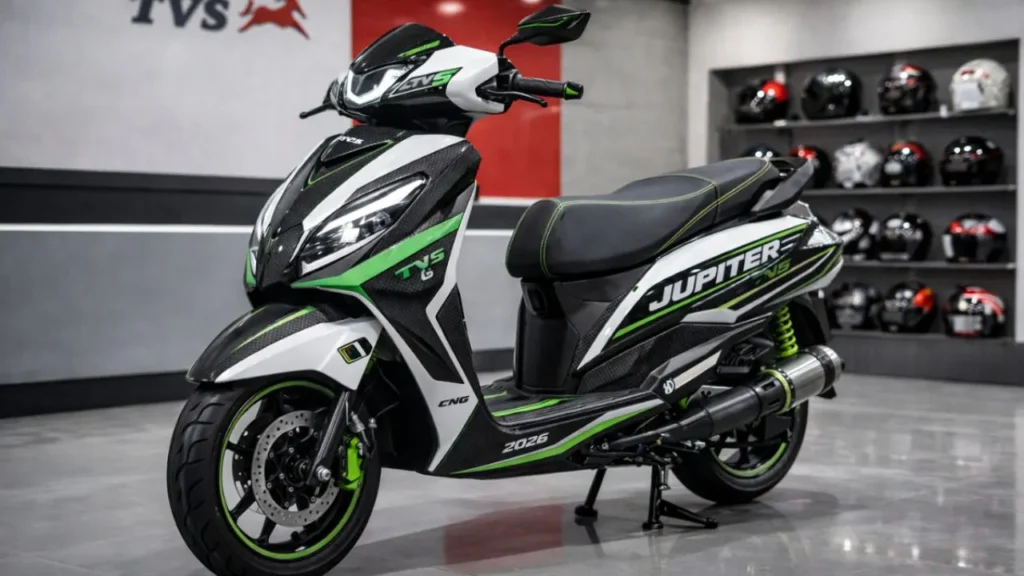
Jupiter CNG features a practical and commuter-friendly design similar to the standard Jupiter. However, some changes have been made to accommodate the CNG tank. The scooter maintains a simple yet robust look with a comfortable seat and durable body structure. Due to the CNG cylinder placement, under-seat storage is limited, but the overall design remains ideal for daily use.
Engine & Power
The scooter is powered by a 124.8cc single-cylinder engine that supports dual-fuel technology. It can run on both petrol and CNG, offering flexibility to riders. The engine produces around 7.1 bhp of power and approximately 9.4 Nm of torque, making it suitable for smooth city commuting.
Mileage & Performance
Mileage is the biggest highlight of this scooter. In CNG mode, it delivers around 84 km/kg, which significantly reduces running costs. With a combined fuel system (CNG + petrol), the total range is expected to be around 200–220 km. Performance is slightly calmer compared to regular petrol scooters, but it is perfectly adequate for everyday rides.

nteriors & Features
The scooter comes with practical and essential features such as a digital-analog instrument cluster, comfortable seating, and easy-to-use controls. A dedicated switch allows riders to seamlessly switch between petrol and CNG modes, adding to its convenience.
Safety & Technology
For safety, the scooter includes a reliable braking system suitable for city conditions. The dual-fuel system is its most advanced technological feature, making it a future-ready and eco-friendly option with lower emissions compared to traditional petrol scooters.
Market Impact

TVS Motor Company is expected to launch this scooter in India at a price range of ₹90,000 to ₹1 lakh. If launched, it could create a new segment in the two-wheeler market and become a game-changer for cost-conscious commuters.
Final Verdict
The TVS Jupiter CNG scooter has the potential to be a smart and economical choice for daily commuters looking to save on fuel costs. While reduced storage space and limited CNG infrastructure may be minor drawbacks, its low running cost and eco-friendly nature make it a strong contender for the future of urban mobility.